Two weeks is the sweet spot for a first trip to Australia. It is not enough to see the whole country, which is roughly the size of the continental United States, but it is enough to string together the four experiences most first-timers want: Sydney's harbor, the Great Barrier Reef, the red heart of the outback at Uluru, and Melbourne's laneways and coast. The trick is to fly between regions rather than drive, and to accept that you are sampling a continent, not conquering it.
Before you go: entry, flights and getting around
Almost every visitor needs authorization before boarding. Passport holders from the US, Canada, Japan, Singapore and several other countries apply for an Electronic Travel Authority (ETA, subclass 601) through the official AustralianETA app, which carries a service charge of about AUD 20. Holders of eligible European passports, including the UK, can instead apply for the free eVisitor (subclass 651) online. Both allow stays of up to three months per visit. Apply only through official government channels; third-party sites charge large markups.
Domestic flights are the backbone of this route. Qantas, Virgin Australia and Jetstar connect Sydney, Cairns, Ayers Rock (Yulara) and Melbourne, though not every pair has a daily nonstop, so build your Uluru leg around the schedules first. Book internal flights early for the best fares and check baggage allowances on budget tickets.
Find cheap flights
Compare fares to Sydney, Auckland, Nadi, Papeete and beyond. Via Trip.com.
The itinerary at a glance
| Days | Base | Highlights |
|---|---|---|
| 1-4 | Sydney | Opera House, harbor ferries, Bondi to Coogee walk, Blue Mountains day trip |
| 5-8 | Cairns or Port Douglas | Outer reef day trip, Daintree Rainforest, Kuranda |
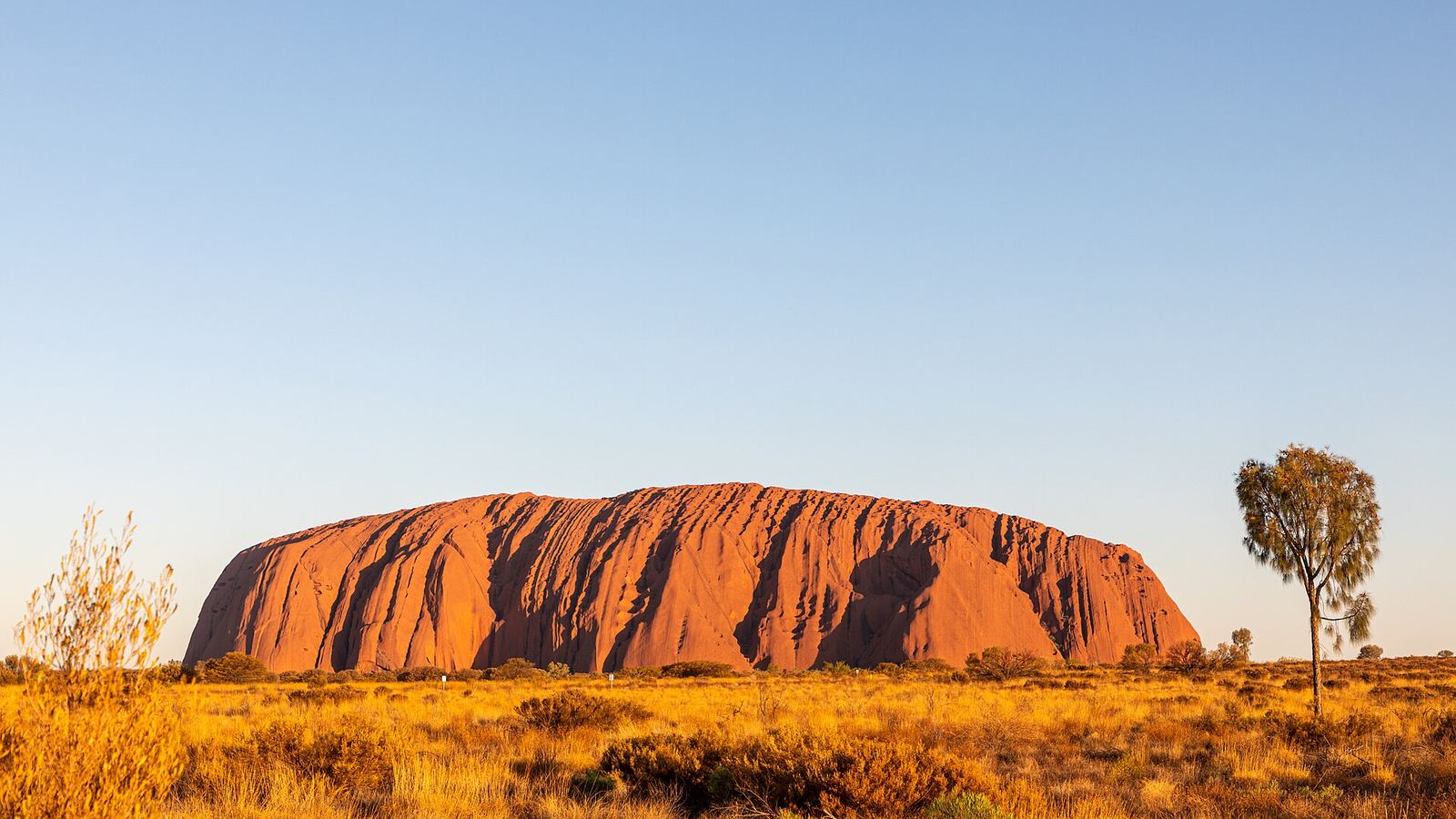
| 9-10 | Uluru (Yulara) | Sunrise and sunset at Uluru, Kata Tjuta, base walk |
| 11-14 | Melbourne | Laneways, food scene, Great Ocean Road and Twelve Apostles |
Days 1-4: Sydney
Arrive in Sydney and take it easy on day one. Walk from Circular Quay around to the Sydney Opera House and the Royal Botanic Garden, then stay out for sunset at Mrs Macquarie's Chair. Fighting jet lag in daylight is the fastest cure.
On day two, take a guided tour inside the Opera House (about an hour), explore The Rocks, then catch a ferry from Circular Quay to Manly. The 30-minute crossing is one of the great cheap thrills in world travel, and you pay with the same contactless card or Opal card as on buses and trains.
Day three is for the coast. The Bondi to Coogee walk runs about 6 kilometers along sandstone cliffs, past ocean pools and small beaches; allow two to three hours with swim stops. Start at Bondi Beach for breakfast and finish with fish and chips in Coogee.
Use day four for the Blue Mountains. Trains run from Central Station to Katoomba in roughly two hours, and from there you can walk to Echo Point for the Three Sisters and take one of the cliff-top tracks. Our Sydney first-timer's guide covers neighborhoods, ferries and the day trip in more depth.
Days 5-8: The Great Barrier Reef and Daintree
Fly north to Cairns, about three hours from Sydney. You have two choices for a base: Cairns itself, which has the widest range of tours and budgets, or Port Douglas, roughly an hour's drive north, which is smaller, more relaxed and closer to some outer reef sites and the Daintree. Our Great Barrier Reef guide compares Cairns, Port Douglas and the Whitsundays in detail.
- Day 5: Arrive, settle in, walk the Cairns Esplanade and swim in the free lagoon pool.
- Day 6: Full-day outer reef trip by boat. Outer reef sites generally offer clearer water and healthier coral than inshore spots. Expect roughly AUD 250-350 per person for a quality snorkel day.
- Day 7: The Daintree Rainforest, where ancient forest meets the sea at Cape Tribulation. A guided tour helps you spot wildlife and understand the cultural significance of the land to the Kuku Yalanji people.
- Day 8: Kuranda by scenic railway and Skyrail cableway, or a second reef day if the ocean is calling.
From roughly November to May, box jellyfish and Irukandji can be present in tropical waters. Reef operators supply full-body stinger suits; wear them.
Tours, tickets & day trips
Reef cruises, Hobbiton, lagoon tours and more. Via GetYourGuide.
Days 9-10: Uluru and Kata Tjuta
Fly to Ayers Rock Airport, a few minutes from the resort town of Yulara, which holds nearly all of the area's accommodation. Two nights is the minimum to see Uluru at both ends of the day without rushing. You need a park pass for Uluru-Kata Tjuta National Park (roughly AUD 38 per adult for three days).
Watch sunset at the viewing area on your first evening, when the rock shifts through orange and deep red. The next morning, be up for sunrise, then walk part or all of the roughly 10-kilometer base walk. Free ranger-led walks explain Anangu law and stories at sites such as the Mutitjulu waterhole. Climbing Uluru has been permanently banned since 2019 at the request of the traditional owners, and some sacred sites along the base are not to be photographed; signs make this clear.
In the afternoon, drive or take a tour to Kata Tjuta, a cluster of 36 domed rocks about 50 kilometers away. The Valley of the Winds walk is the highlight but closes during extreme heat. Start early, carry plenty of water and pack a fly net in warmer months.
Days 11-14: Melbourne and the Great Ocean Road
Finish in Melbourne, a city that rewards wandering. Spend day 11 in the laneways and arcades of the CBD, chasing coffee and street art along Hosier Lane and Degraves Street. The free tram zone covers the city center.
On day 12, explore Fitzroy and Collingwood for independent shops and bars, the Queen Victoria Market, and the riverside around Southbank. If you are visiting during the football season (roughly March to September), an AFL match at the MCG is a genuinely local experience.
Devote days 13 and 14 to the Great Ocean Road. It is possible as a very long day tour, but an overnight stop in Apollo Bay or Port Campbell makes the drive far more enjoyable. Pick up car hire in Melbourne, head west through Torquay and Lorne, and reach the Twelve Apostles for late-afternoon light. Return the next day via the inland route, which is faster, then fly home from Melbourne.
Compare car hire
Road-trip Australia and New Zealand for less. Via DiscoverCars.
Rough budget
Costs vary hugely by season and comfort level, but a mid-range traveler should plan for roughly AUD 250-400 per person per day including accommodation, plus internal flights. Uluru is the priciest stop, since accommodation is limited and in high demand. Compare hotels early for Yulara and Port Douglas in particular.
- Accommodation: about AUD 150-300 per night for mid-range rooms in cities; more at Uluru.
- Internal flights: about AUD 150-400 per leg, depending on route and how early you book.
- Tours: about AUD 250-350 for an outer reef day; Uluru sunrise tours from about AUD 100.
When to go and how to tweak it
This route works best from about May to October, when the tropical north is dry and the outback is pleasantly warm by day. Melbourne will be cool then, so pack layers. In summer, from December to February, the south is at its best but Uluru can be extremely hot and the north is wet and humid. See our month-by-month guide for detail.
Want a slower trip? Drop the Blue Mountains, or swap Melbourne for Tasmania. If you are weighing a combined trip, read our Australia vs New Zealand comparison. Set up an eSIM before you land so maps and ride-hail apps work from the moment you arrive.
Map of places in this guide
Frequently asked questions
Is two weeks enough for Australia?
Two weeks is enough for a strong first taste if you fly between regions. Focus on four bases, such as Sydney, Cairns, Uluru and Melbourne, rather than trying to drive long distances.
Do I need a visa to visit Australia?
Most visitors need an ETA (about AUD 20 via the official AustralianETA app) or, for eligible European passports, a free eVisitor. Apply before you book non-refundable travel and only through official government channels.
Can you climb Uluru?
No. Climbing Uluru has been permanently banned since October 2019 out of respect for the Anangu traditional owners. The base walk and ranger-guided walks are the best ways to experience it.
What is the best month for this itinerary?
May to October generally suits the whole route, with dry weather in the tropics and comfortable outback days. September and October are especially good, though Melbourne is cooler.
Some links on this page are affiliate links. If you book through them we may earn a small commission at no extra cost to you. Learn more.