Tasmania, the island state off Australia's southeast corner, punches far above its size. Around 40 percent of it is protected in national parks and reserves, its food and wine scene rivals any mainland city, and Hobart's MONA is one of the most talked-about museums in the world. Distances are short enough for a satisfying road trip in a week, yet the landscapes range from white-sand bays to alpine lakes. This guide covers Hobart, MONA, Freycinet, Cradle Mountain and a practical road trip route.
Getting to Tasmania
Most visitors fly. Hobart and Launceston have direct flights from Melbourne, Sydney, Brisbane and other mainland cities, typically one to two hours. Fly into Hobart and out of Launceston, or vice versa, to avoid backtracking.
To bring your own vehicle, take the Spirit of Tasmania ferry across Bass Strait between Geelong, near Melbourne, and Devonport on Tasmania's north coast. The larger new ships, Spirit of Tasmania IV and V, begin passenger services on 31 October 2026, with no passenger sailings during a changeover week from 23 to 30 October. The operator has said it is discontinuing day sailings, so plan on an overnight crossing of roughly nine to eleven hours and book a cabin or recliner, especially for the summer holidays.
Find cheap flights
Compare fares to Sydney, Auckland, Nadi, Papeete and beyond. Via Trip.com.
Hobart
Australia's second-oldest capital sits on the Derwent River beneath kunanyi/Mount Wellington. Allow at least two or three days.
- Salamanca Place and Battery Point: Georgian sandstone warehouses now house galleries and restaurants. Salamanca Market runs every Saturday with local produce and crafts.
- kunanyi/Mount Wellington: drive or take a shuttle bus to the 1,271-meter summit for sweeping views. It can be near freezing even in summer, so bring a jacket.
- Waterfront dining: try local oysters, salmon and scallop pies, or the fish punts at Constitution Dock.
- Tasmanian Museum and Art Gallery: free entry, with strong collections on Aboriginal Tasmania and the state's natural history.
MONA: the Museum of Old and New Art
MONA, carved into a sandstone cliff on the Berriedale peninsula, is the private museum of professional gambler and collector David Walsh. Its mix of antiquities and provocative contemporary art is deliberately confrontational, playful and occasionally shocking. There are no conventional labels; instead, a phone app guides you through. Plan at least half a day.
The most enjoyable way to arrive is the MONA ferry from Brooke Street Pier in central Hobart, about 25 minutes up the Derwent. Ferry and museum tickets are sold separately and are best booked ahead; entry uses timed slots, museum tickets for interstate and international adults are about AUD 40, and Tasmanians enter free. The museum has generally opened Thursday to Monday, so check days before you plan around it. The site also has a winery, brewery, restaurants and luxury pavilions. MONA's winter festival, Dark Mofo, has run in June, but check the current program, as the festival has paused and changed format in recent years.
Day trips from Hobart
- Port Arthur Historic Site: about 1.5 hours away on the Tasman Peninsula, this former penal settlement is a UNESCO World Heritage site. Combine it with the sea cliffs of Tasman National Park.
- Bruny Island: a short car ferry from Kettering leads to cheese, oysters, a lighthouse and wildlife cruises along towering dolerite cliffs.
- Mount Field National Park: the tiered Russell Falls and towering swamp gums.
- Huon Valley: cideries, orchards and farm gates.
Tours, tickets & day trips
Reef cruises, Hobbiton, lagoon tours and more. Via GetYourGuide.
Freycinet National Park
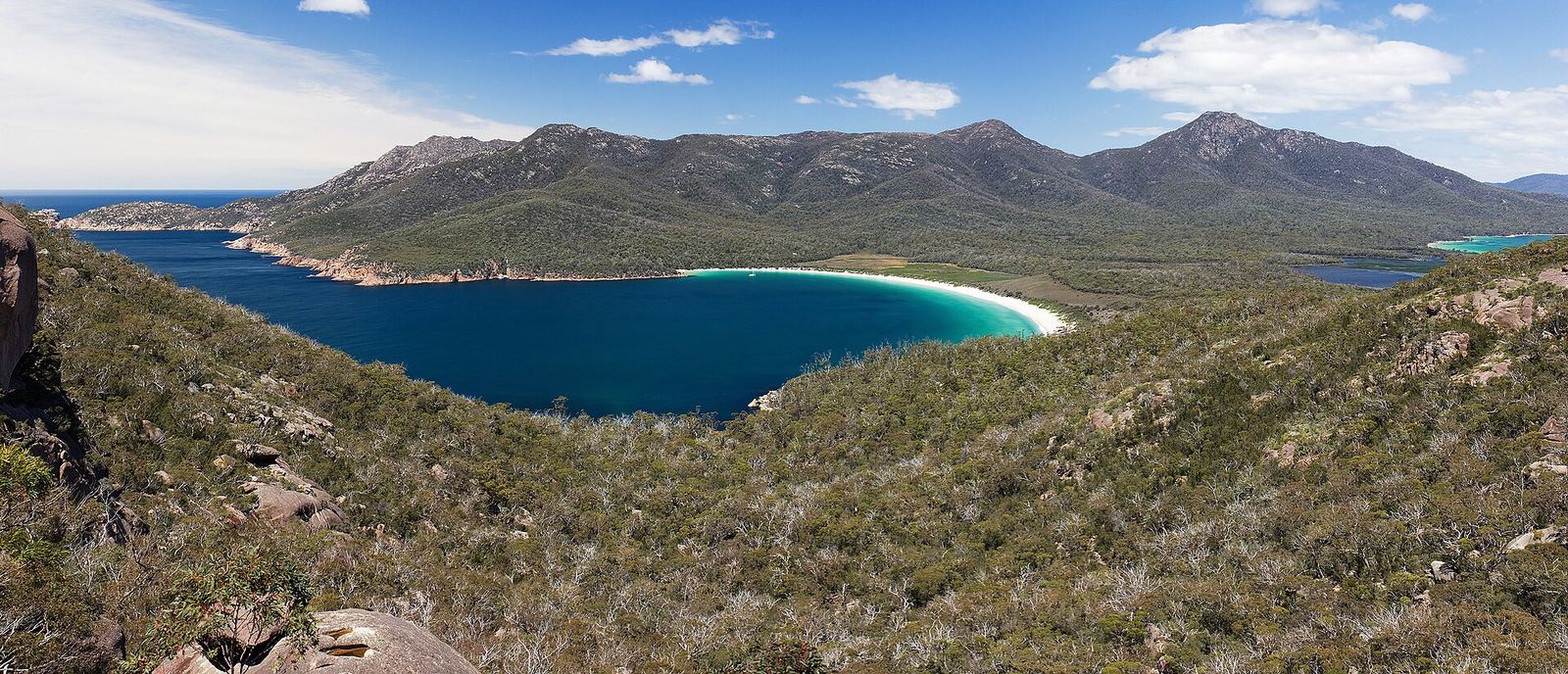
On the east coast, about 2.5 hours from Hobart, Freycinet is home to Wineglass Bay, one of Australia's most photographed beaches. The walk to the Wineglass Bay Lookout is roughly 1 to 1.5 hours return and fairly steep; continue down to the beach for a total of around three hours. Fit walkers can tackle Mount Amos for a higher view, but it involves steep rock scrambling and should be avoided in the wet. Kayaking and boat cruises from Coles Bay offer different perspectives, and the nearby Freycinet Marine Farm is a favorite for oysters.
Farther north, the Bay of Fires is famous for granite boulders splashed with orange lichen and empty white beaches.
Cradle Mountain
Cradle Mountain-Lake St Clair National Park, in the Tasmanian Wilderness World Heritage Area, is the island's alpine showpiece. Park at the visitor center and ride the shuttle bus to Dove Lake, as private cars are restricted on the access road for most of the day. The Dove Lake Circuit, about 6 kilometers and two to three hours, loops beneath the jagged peak and passes the much-photographed boatshed. Fitter hikers can climb to Marions Lookout or the summit, which involves boulder scrambling.
Wombats graze near the visitor center and on the buttongrass plains at dusk. The six-day Overland Track begins here and runs to Lake St Clair; it requires booking and a fee in the main season. Weather is notoriously changeable, and snow can fall at any time of year, so bring warm, waterproof gear. Plan at least one night nearby.
A 7 to 10 day Tasmania road trip
| Days | Route | Highlights |
|---|---|---|
| 1-3 | Hobart | Salamanca, MONA, kunanyi, Port Arthur or Bruny Island |
| 4-5 | Hobart to Freycinet (2.5 hrs) | Wineglass Bay, Coles Bay, oysters |
| 6 | Freycinet to Launceston via Bay of Fires (4 hrs) | Lichen-covered boulders, St Helens |
| 7 | Launceston | Cataract Gorge, Tamar Valley wineries |
| 8-9 | Launceston to Cradle Mountain (2 hrs) | Dove Lake, wombats, wilderness walks |
| 10 | Cradle Mountain to Launceston or Devonport | Fly or sail home |
With more time, add the wild West Coast: Strahan for a Gordon River cruise, then the drive through the Franklin-Gordon Wild Rivers National Park back to Hobart.
Driving tips
- Pick up car hire at Hobart or Launceston airport. Roads are sealed to all major sights but are often winding and narrow.
- You need a Tasmania Parks Pass to enter national parks. A vehicle Holiday Pass covering up to eight weeks is the best value for a road trip.
- Avoid driving at dawn and dusk, when wildlife is most active on roads.
- Fuel stations are sparse in the west and highlands; fill up when you can.
Compare car hire
Road-trip Australia and New Zealand for less. Via DiscoverCars.
When to go
December to March brings the warmest, longest days and the best hiking conditions, but also peak prices. Autumn (April to May) offers crisp weather and the turning of the deciduous beech, or fagus, around Cradle Mountain in late April. Winter is cold, with snow on the peaks, but cozy and quiet. Spring brings wildflowers and lambs. See our best time to visit Australia guide for more.
Tasmania makes a great alternative to Melbourne in our two-week Australia itinerary, and nature lovers weighing it against New Zealand should read Australia vs New Zealand. Book hotels early around Cradle Mountain and Freycinet, where options are limited.
Map of places in this guide
Frequently asked questions
How many days do you need in Tasmania?
A week covers Hobart, Freycinet and Cradle Mountain at a comfortable pace. Ten days or more lets you add the Bay of Fires, the West Coast or a multi-day hike.
Is it better to fly or take the ferry to Tasmania?
Flying is faster and often cheaper. The overnight Spirit of Tasmania ferry from Geelong makes sense if you want to bring your own car or campervan.
Do I need a pass for Tasmania's national parks?
Yes. A Tasmania Parks Pass is required, and the vehicle Holiday Pass, valid for up to eight weeks, is the best value for road trips.
How do you get to MONA?
Take the MONA ferry from Brooke Street Pier in central Hobart, about 25 minutes upriver. You can also drive or take a bus to the Berriedale site.
Some links on this page are affiliate links. If you book through them we may earn a small commission at no extra cost to you. Learn more.