Oceania is mostly ocean, so how you move between places shapes your whole trip. Flights connect almost everything, a handful of ferry routes are genuinely useful, and in Australia and New Zealand you can add trains, long-distance buses and road trips. This guide covers the main hubs, inter-island flights, ferries, ground transport and car hire tips for 2026.
The five hubs that matter
Most island-hopping routes run through a small number of airports. Planning around them saves time and money, because flying between two islands often means connecting via a hub rather than flying direct.
| Hub | Main airline | Useful for |
|---|---|---|
| Sydney (SYD) | Qantas, Virgin Australia, Jetstar | Australia domestic, New Caledonia, Fiji, Vanuatu, Solomon Islands, Papua New Guinea |
| Auckland (AKL) | Air New Zealand | Cook Islands, Samoa, Tonga, Fiji, Tahiti, Niue, Hawaii |
| Nadi (NAN) | Fiji Airways | Samoa, Tonga, Vanuatu, Solomon Islands, Kiribati, Tuvalu and Fiji's outer islands |
| Papeete (PPT) | Air Tahiti Nui, Air Tahiti | French Polynesia's 100+ islands, plus links to Auckland, Los Angeles and the Cook Islands |
| Honolulu (HNL) | Hawaiian/Alaska Airlines, United | Tahiti, Rarotonga, Fiji, American Samoa and Micronesia |
Brisbane is also a strong gateway for Papua New Guinea, Vanuatu and the Solomon Islands, while Guam is the main gateway for Palau and Micronesia.
Flying between the islands
Many island routes run only once or twice a week, so build your itinerary around the flight schedule rather than the other way around. A few things to know:
- Fiji Airways links Nadi with most of the South Pacific, which makes Fiji a natural base. Its domestic arm, Fiji Link, flies to the outer islands. See our Fiji guide.
- Air Tahiti flies across French Polynesia and sells multi-island passes that are usually cheaper than individual tickets for routes such as Tahiti–Moorea–Huahine–Raiatea–Bora Bora.
- Air Rarotonga connects Rarotonga with the other Cook Islands, including the short hop to the Aitutaki Lagoon.
- United's "Island Hopper" runs between Honolulu and Guam with stops in the Marshall Islands and Micronesia, including Pohnpei, home of Nan Madol.
- Smaller national carriers in Vanuatu, Tonga, Samoa and the Solomon Islands have had schedule disruptions in recent years. Check current timetables close to departure and leave a buffer day before any long-haul flight home.
Strict baggage limits are common on small aircraft, often 10–20 kg checked plus a small carry-on. Pack soft bags. Our packing guide helps.
Find cheap flights
Compare fares to Sydney, Auckland, Nadi, Papeete and beyond. Via Trip.com.
Ferries and boats worth knowing
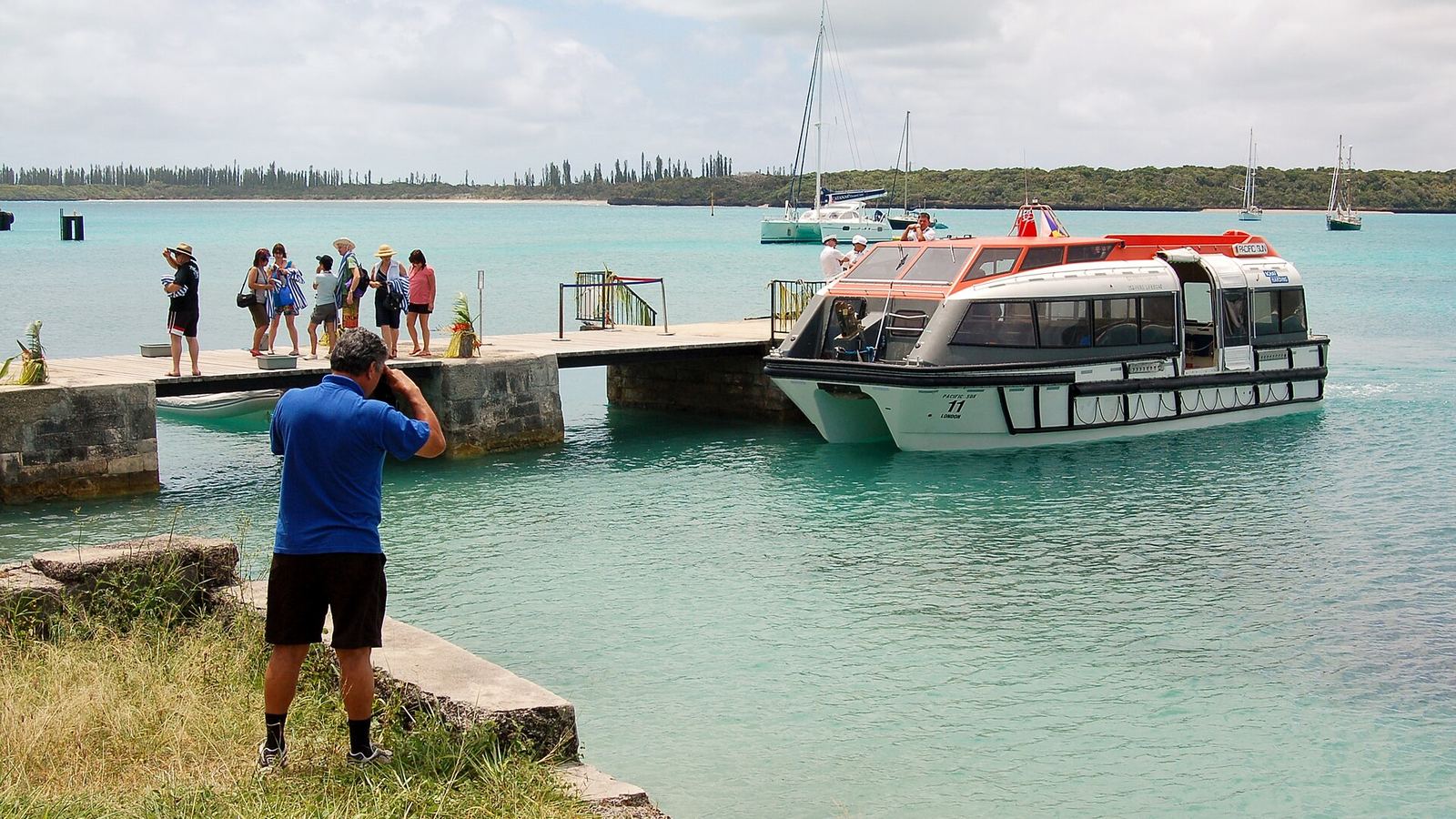
Long ocean crossings by ferry are rare, but some short routes are excellent:
- Tahiti to Moorea: fast ferries cross in roughly 30–45 minutes several times a day, making Moorea an easy day trip or base.
- Fiji island transfers: catamarans from Port Denarau serve the Mamanuca Islands, and the Yasawa Flyer runs daily up the Yasawa Islands, with hop-on hop-off passes.
- Samoa: the ferry from Mulifanua wharf on Upolu to Salelologa on Savai'i takes around an hour and carries cars.
- New Zealand: Interislander and Bluebridge ferries cross Cook Strait between Wellington and Picton in about 3.5 hours, with vehicles.
- Tasmania: the Spirit of Tasmania sails between Geelong and Devonport, handy if you want your own car for Cradle Mountain.
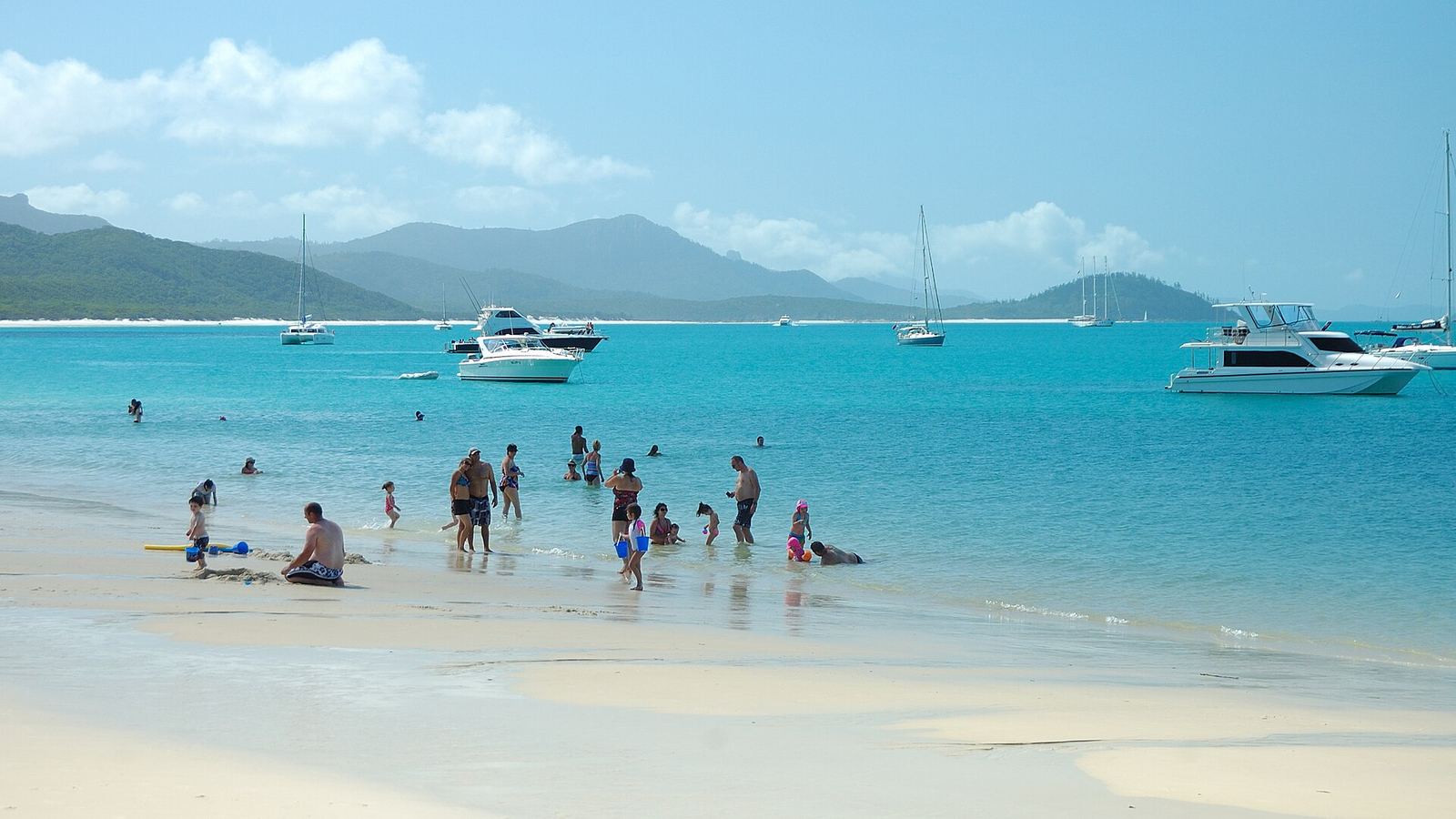
- Queensland islands: ferries serve the Whitsundays from Airlie Beach, and vehicle barges cross to K'gari (4WD only).
Trains and buses in Australia
Australia's long-distance trains are more about the journey than speed. The Ghan runs from Adelaide to Darwin via Alice Springs, and the Indian Pacific crosses the continent from Sydney to Perth. Both are premium experiences priced accordingly. For practical transport, NSW TrainLink XPT services connect Sydney with Melbourne and Brisbane, and Queensland Rail's Spirit of Queensland runs between Brisbane and Cairns, the gateway to the Great Barrier Reef.
Coaches such as Greyhound Australia cover the east coast and are popular with backpackers. Domestic flights are often faster and similar in price over long distances, such as Sydney to Uluru or Melbourne to Cairns.
Trains and buses in New Zealand
New Zealand's scenic trains include the Northern Explorer (Auckland–Wellington), the TranzAlpine (Christchurch–Greymouth across the Southern Alps) and the seasonal Coastal Pacific (Christchurch–Picton). InterCity coaches reach most towns, including Queenstown, Rotorua and Te Anau for Milford Sound. Compare routes on our trains, buses and ferries page.
Trains, buses & ferries
Compare ground transport and plan connections. Via Omio.
Car hire tips and driving on the left
Renting a car or campervan is the most flexible way to explore Australia and New Zealand, and it works well on larger islands such as Viti Levu, Upolu, Tahiti and Rarotonga.
| Drive on the left | Drive on the right |
|---|---|
| Australia, New Zealand, Fiji, Samoa, Tonga, Cook Islands, Papua New Guinea, Solomon Islands | French Polynesia, New Caledonia, Vanuatu, Palau, Hawaii, Easter Island |
- Licenses: carry your home license. If it is not in English, bring an International Driving Permit or an approved translation. Rules for scooters vary by island, so check locally before you ride.
- Driving on the left: the driver sits on the right and you shift with your left hand. Take it slowly at roundabouts (give way to the right) and on one-lane bridges in New Zealand.
- Distances deceive: New Zealand's winding roads mean 300 km can take five hours or more. In the Australian outback, avoid driving at dawn, dusk or night because of kangaroos and livestock.
- Insurance: standard rental excess can be high. Check what your policy covers for gravel roads, which some contracts exclude, and whether 4WD tracks are allowed.
- Fuel: fill up whenever you can in remote areas; gaps between stations in the outback can exceed 200 km.
Compare car hire deals early for December and January, when campervans and cars sell out.
Compare car hire
Road-trip Australia and New Zealand for less. Via DiscoverCars.
Booking tips for island routes
- Book on one ticket where you can. If a delayed first flight makes you miss a weekly connection, a single booking gives you more protection than two separate tickets.
- Watch the date line. Flights between Honolulu or Rarotonga and Fiji, Tonga or Samoa cross the International Date Line, so you can "lose" or "gain" a day. Double-check hotel dates.
- Allow for weather. Cyclone season runs roughly November to April in the South Pacific, when small-aircraft flights and boat transfers are more likely to be cancelled.
Putting it together
A classic multi-country route might be Sydney to Nadi, a week in Fiji, Nadi to Apia for Samoa, then on to Auckland for a New Zealand road trip. Another popular option links Hawaii with Tahiti and Rarotonga; see our Hawaii to the South Pacific guide. Check our budget guide for what transport adds to your daily costs and the landmark map to see how places connect.
Map of places in this guide
Frequently asked questions
What is the best hub for island-hopping in the South Pacific?
Nadi in Fiji and Auckland in New Zealand have the most connections to other Pacific islands. Papeete is the hub for French Polynesia, and Honolulu links the North and South Pacific.
Which Oceania countries drive on the left?
Australia, New Zealand, Fiji, Samoa, Tonga, the Cook Islands, Papua New Guinea and the Solomon Islands drive on the left. French Polynesia, New Caledonia, Vanuatu and Palau drive on the right.
Is there a ferry between Australia and New Zealand?
No. There is no regular passenger ferry across the Tasman Sea, so you need to fly, or travel on a cruise.
Can I use my driver's license in Australia and New Zealand?
Yes, as a visitor you can generally drive on a valid overseas license. If it is not in English, carry an International Driving Permit or an approved translation.
Some links on this page are affiliate links. If you book through them we may earn a small commission at no extra cost to you. Learn more.